

For the past several years, I’ve designed online digital literacy courses for community college students. One of the first concepts my students learn is the difference between hardware and software technology. Hardware is essentially the technology you can touch and feel, like computer monitors, keyboards, printers, wireless routers, and microchips. Software, on the other hand, is the computer code or electronic instructions that tell the hardware what to do. While you can see the results of these instructions on a screen or on a printed page, you can’t see or touch the software itself. But the unseen software breathes functional life into the computer hardware.
In a similar way, our material world of houses, vehicles, furniture, and physical bodies would be lifeless without the intangible world of human character, values, and relationships.
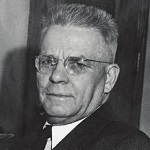 In a 1960 address to college educators, my great-grandfather P.A. Christensen conveyed his gratitude for the animating presence of light and truth in human society. The classic works of literature and the enduring truth inspired by nature were for him “unearned” gifts that found their expression in the lives of ordinary people. These gifts impact the quality of our lives within the immaterial “realm of human growth and transcendence,” leading to character development and social harmony.
One of Professor Christensen’s purposes was to challenge his students’ unthinking embrace of what he termed the “gospel of work,” the philosophy that we get nothing in life that we haven’t earned, nothing that we haven’t paid for. From his perspective, such a materialistic philosophy leaves little room for appreciating the gifts that are graciously given by our fellow human travelers.
The intangible gifts of wisdom, generosity, and other human virtues constitute what I call character education. The core curriculum for this education is the overflowing beauty of nature, the abundant wealth of literature, and the supernal gifts of family and friendship.
As I reflect on my great-grandfather’s nearly 60-year-old message, my thoughts turn to the vast inequality in today’s society; for so many people, the gifts I take for granted are neither free nor readily available. Domestic violence, impoverished neighborhoods, and failing schools often substitute cruelty for compassion and overindulgence for self-mastery. This awareness periodically disturbs my sense of satisfaction as I read Aristotle in the comfort of my happy home.
Of course, I’m digressing and missing my grandfather’s point here. The more aware and grateful I am for my unearned gifts, the more likely I am to share those gifts with the less experienced or the less fortunate, those who don’t enjoy unfettered access to light and truth. I’m also more likely to drink them in deeply myself, living the timeless principles of truth in the present.
As Jesus said to his disciples, “freely ye have received, freely give.” This response is a natural flow of goods from the original source, through me, to others. I consequently have no time to feel guilty about the privileges of my life. Understanding that “where much is given, much is required,” I am more determined to share.
As a parent and educator, I approach my teaching responsibilities with a degree of humility. My eagerness to enlighten others feels presumptuous. But we give and take with an open mind and a willingness to be corrected. We engage in the conversation because of our conviction that character development and moral education are needed today—perhaps more than ever.
Character education is not a panacea that will solve all our societal problems. But any serious effort to address our problems must include it. We need principles of truth that draw upon a shared moral vocabulary. We need to be inspired by real-world examples of courage and wisdom. We need to recognize moral failure and learn how to recover from it.
In promoting this conversation, we can and should turn to the latest social scientific research. But we also need to engage with the voices of the past—our unearned inheritance from faithful, rational minds. These poets and teachers, scientists and philosophers, didn’t always get things right. They had their own blind spots and occasions of moral failure. We can refuse, for this reason, to consider their professed insights. Disillusioned with the past, we can rely exclusively on our own experience and intuition to change the future. But the foundation of such a response is both arrogance and ingratitude.
Reconciling the voices of the past with the realities of the present undoubtedly calls for a venture in faith, a precarious journey into the spiritual realm of human growth and transcendence. As I continue my own journey, I’m grateful for faithful companions—past and present—who inspire me to be better than I am.
 Aristotle explains that a magnanimous man believes he deserves great things such as honor and respect because he really does deserve them. He is great both in the sense that he has obtained a fullness of virtue and in the sense that he possesses wealth, power, and influence. His abundant resources allow him to do much more good for others than they could do for him. While he willingly accepts legitimate honors bestowed by noble men, he has no interest in arrogantly displaying his superiority among ordinary people. In fact, he is self-effacing and unassuming among them. It is only in the presence of distinguished, influential men that he speaks openly of his accomplishments. Nonetheless, he is always more concerned with promoting truth and virtue than he is with impressing other people.
 One of Ralph Waldo Emerson’s favorite themes is that each individual must discover and embrace his or her personal calling in life. Each person “has faculties silently inviting him thither to endless exertion…. He inclines to do something which is easy to him, and good when it is done, but which no other man can do. He has no rival. For the more truly he consults his own powers, the more difference will his work exhibit from the work of any other. His ambition is exactly proportioned to his powers.…Every man has this call of the power to do some[thing] unique, and no man has any other call….”
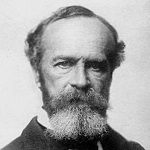 I firmly believe that every person possesses unique gifts that can only be developed through strenuous effort and refined through adversity. William James, the father of modern psychology, speaks of the challenge each of us face in realizing our potential: “Every one knows on any given day that there are energies slumbering in him which the incitements of that day do not call forth, but which he might display if these were greater. Most of us feel as if we lived habitually with a sort of cloud weighing on us, below our highest notch of clearness in discernment, sureness in reasoning, or firmness in deciding. Compared with what we ought to be, we are only half-awake. Our fires are damped, our drafts are checked. We are making use of only a small part of our possible mental and physical resources.”
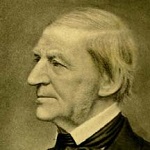 Ralph Waldo Emerson compares the power of personal commitment to the well-established order of nature: “
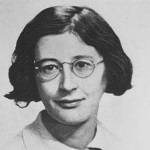 Years ago, I came across an essay written by French philosopher and mystic Simone Weil (1909-1943). The title of the essay is “Reflections on the Right Use of School Studies with a View to the Love of God.” Weil claims here that “the real object and almost the sole interest” of school work is “the development of the faculty of attention.” No matter what subject we devote ourselves to, the result can be personal transformation and joy: “Even if our efforts of attention seem for years to be producing no result, one day a light that is in exact proportion to them will flood the soul.”

 As the virtue that most impacts human relationships, benevolence is an indispensable catalyst for change. In Strength to Love, Martin Luther King states, “Returning hate for hate multiplies hate, adding deeper darkness to a night already devoid of stars. Darkness cannot drive out darkness; only light can do that. Hate cannot drive out hate, only love can do that.” Dr. King’s call for change through nonviolent resistance is grounded in the principle of love, which has the power to destroy the forces of evil and establish justice.
 This reminds me of one of my favorite quotes from Henry David Thoreau. Near the end of Walden, he declares, “I learned this, at least, by my experiment; that if one advances confidently in the direction of his dreams, and endeavors to live the life which he has imagined, he will meet with a success unexpected in common hours.” Happiness is about confidently and steadily living the life we’ve imagined and then finding an unexpected success.