
Aristotle argued that extreme vices, such as willful self-indulgence and stinginess, are incurable. Such a claim makes Ebeneezer Scrooge’s fictional transformation all the more remarkable.
As a general rule, Aristotle is probably right. Deeply ingrained habits are difficult to change. Yet some of us are acquainted with a present-day Jean Valjean or Saul of Tarsus, someone who has overcome vicious character flaws through a sudden transformation.
Several weeks ago I rediscovered William James’s Varieties of Religious Experience, which was published well over 100 years ago. In Varieties, he takes religious conversion seriously, especially when it results in an observable change in behavior, character, or personality.
At the end of his chapter on the religion of healthy mindedness, James quotes an anonymous account shared by a friend:
“At the urgent request of friends, and with no faith and hardly any hope (possibly owing to a previous unsuccessful experience with a Christian Scientist), our little daughter was placed under the care of a healer, and cured of a trouble about which the physician had been very discouraging in his diagnosis. This interested me, and I began studying earnestly the method and philosophy of this method of healing. Gradually an inner peace and tranquility came to me in so positive a way that my manner changed greatly. My children and friends noticed the change and commented upon it. All feelings of irritability disappeared. Even the expression of my face changed noticeably.
“I had been bigoted, aggressive, and intolerant in discussion, both in public and private. I grew broadly tolerant and receptive toward the views of others. I had been nervous and irritable, coming home two or three times a week with a sick headache induced, as I then supposed, by dyspepsia and catarrh. I grew serene and gentle, and the physical troubles entirely disappeared. I had been in the habit of approaching every business interview with an almost morbid dread. I now meet every one with confidence and inner calm.
“I may say that the growth has all been toward the elimination of selfishness. I do not mean simply the grosser, more sensual forms, but those subtler and generally unrecognized kinds, such as express themselves in sorrow, grief, regret, envy, etc. It has been in the direction of a practical, working realization of the immanence of God and the Divinity of man’s true, inner self.”
Notice how accurately this man describes 21st century problems, including intolerance, selfishness, and anxiety. Today we might use different terms for the physical symptoms of generalized anxiety disorder, such as nausea and indigestion rather than dyspepsia and catarrh. But the rest of his self-diagnosis sounds contemporary.
James’s purpose in sharing the account is not to judge the literal truth value of Christian Science beliefs. For example, he is not interested in establishing whether sickness is actually an illusion or whether God is the principle of unconditional and unchanging love. He simply wants to observe and consider the practical effects of a system of beliefs. If the effects are favorable and profound, those beliefs should not be dismissed as false. Their pragmatic value can shed light on the human condition.
James shows how people with different dispositions and mindsets respond to different sets of beliefs. For example, someone who believes in the essential goodness of human nature (“the healthy-minded”) is more likely to change by ignoring evil and accentuating the positive aspects of her life. On the other hand, someone whose worldview has been shaped by a greater awareness of pain, suffering, and the ultimate futility of mortal life (“the sick soul”) will require a much different type of rebirth, a different passageway to change.
Regardless of why or how people change, the fact that they do change ought to empower us. Knowing that someone, anyone, has experienced a character transformation can have the practical effect of giving the rest of us hope — hope in the potential goodness and malleability of our own character.
With this post, I am beginning a series of features on real people who have experienced a profound shift in their way of thinking and acting. I will be investigating credible reports of character transformation. How permanent are such transformations? Can the changes be verified? What beliefs and actions generally lead to such changes?
My intent is to explore real accounts, whether they’re based on a religious conversion or a new philosophy of life and whether they result in unselfishness, serenity, unprecedented confidence, or some other characteristic of a reformed life.
I want to be inspired by authentic stories of personal change.

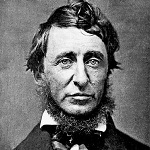
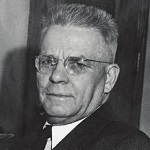 In a 1960 address to college educators, my great-grandfather P.A. Christensen conveyed his gratitude for the animating presence of light and truth in human society. The classic works of literature and the enduring truth inspired by nature were for him “unearned” gifts that found their expression in the lives of ordinary people. These gifts impact the quality of our lives within the immaterial “realm of human growth and transcendence,” leading to character development and social harmony.
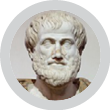 Aristotle explains that a magnanimous man believes he deserves great things such as honor and respect because he really does deserve them. He is great both in the sense that he has obtained a fullness of virtue and in the sense that he possesses wealth, power, and influence. His abundant resources allow him to do much more good for others than they could do for him. While he willingly accepts legitimate honors bestowed by noble men, he has no interest in arrogantly displaying his superiority among ordinary people. In fact, he is self-effacing and unassuming among them. It is only in the presence of distinguished, influential men that he speaks openly of his accomplishments. Nonetheless, he is always more concerned with promoting truth and virtue than he is with impressing other people.
 One of Ralph Waldo Emerson’s favorite themes is that each individual must discover and embrace his or her personal calling in life. Each person “has faculties silently inviting him thither to endless exertion…. He inclines to do something which is easy to him, and good when it is done, but which no other man can do. He has no rival. For the more truly he consults his own powers, the more difference will his work exhibit from the work of any other. His ambition is exactly proportioned to his powers.…Every man has this call of the power to do some[thing] unique, and no man has any other call….”
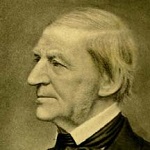 Ralph Waldo Emerson compares the power of personal commitment to the well-established order of nature: “