

Like most parents, I’m concerned about my children’s overabundance of screen time. Tablets, smartphones, and laptops provide instant access to video games, social media, and streaming video, including an unlimited supply of favorite television episodes. Yet sometimes I’m almost as preoccupied as my children. Since my smartphone notifies me about text messages, emails, and important news flashes, I can be summoned at almost any time.
In our age of multitasking and short attention spans, it’s critical to understand that most virtues are built on sustained mental and physical effort. Without attending perceptively to the needs of others, we won’t cultivate a sense of justice in our communities. Without an active awareness of our personal duties and responsibilities, we won’t respond to the call for courage. And without focusing on the most salient aspects of a complex situation, we won’t develop practical wisdom.
As mesmerizing as it can be to immerse ourselves in a 24-hour news cycle, a never-ending feed of social media posts, or a well-crafted movie plot, such activities cannot produce firmness of character. While temporary diversions are appropriate in helping us achieve life balance, most of us embrace distraction as a way of life. We plug ourselves into the Internet.
 Years ago, I came across an essay written by French philosopher and mystic Simone Weil (1909-1943). The title of the essay is “Reflections on the Right Use of School Studies with a View to the Love of God.” Weil claims here that “the real object and almost the sole interest” of school work is “the development of the faculty of attention.” No matter what subject we devote ourselves to, the result can be personal transformation and joy: “Even if our efforts of attention seem for years to be producing no result, one day a light that is in exact proportion to them will flood the soul.”
Interestingly, Weil observes that one of the most transforming effects of school studies comes from turning our attention to mistakes. She suggests that we “take great pains to examine squarely and to contemplate attentively and slowly each school task in which we have failed . . . without seeking any excuse or overlooking any mistake . . . trying to get down to the origin of each fault.” Such actions will generate not only humility, but progress.
So how do we achieve this sanctified state of undivided attention? Weil argues that it is not to be “confused with a kind of muscular effort.” That type of strained approach is both useless and tiring. To produce the kind of transforming results advocated by Weil, we need to embrace the joy of sustained learning. We place our minds in an ardent state of expectation, waiting for truth as an unearned gift.
Weil explains why a state of undivided attention is so difficult to achieve: “Something in our soul has a far more violent repugnance for true attention than the flesh has for bodily fatigue.” She continues: “That is why every time we really concentrate our attention, we destroy the evil in ourselves.” In other words, to replace vice with virtue, we must actively focus our attention on observing, learning, and improving.
In describing Sherlock Holmes’s extraordinary ability to solve crimes, Sir Arthur Conan Doyle paraphrases Thomas Carlyle’s definition of genius as “an infinite capacity for taking pains.” Sherlock’s gift lies in his perceptiveness and sustained concentration on the problem at hand. His colleagues failed to appreciate that his “smallest actions were all directed towards some definite and practical end.”
What prevents us from becoming the Sherlock Holmes of our own life’s problems? More than anything else, it is our lack of attention, the fragmented state of our minds. While we cannot completely escape our frenetic and distracted lives, we can carve out moments for undivided attention. We can wake up early in the morning, leave our smartphones off, and study for an uninterrupted hour. We can take a midday break for a 20-minute walk, disconnected from the Internet and focused on one of our most vexing challenges. We can sit down with family members or friends and fully understand how they’re feeling. These are the moments when we find the joy of learning and the pleasure of communion.
We all need to take time for relaxation and entertainment. But we have a greater need for character development and sustained attention to real life.


 Ralph Waldo Emerson refers to this principle as the law of compensation: “Love and you shall be loved. All love is mathematically just, as much as the two sides of an algebraic equation.” While kindness will not always be reciprocated immediately, the cosmic laws of nature ensure that we will not be cheated in the long run. Sooner or later, benevolence returns to us through the intervention of “a third silent party to all our bargains.”
 As the virtue that most impacts human relationships, benevolence is an indispensable catalyst for change. In Strength to Love, Martin Luther King states, “Returning hate for hate multiplies hate, adding deeper darkness to a night already devoid of stars. Darkness cannot drive out darkness; only light can do that. Hate cannot drive out hate, only love can do that.” Dr. King’s call for change through nonviolent resistance is grounded in the principle of love, which has the power to destroy the forces of evil and establish justice.
 This reminds me of one of my favorite quotes from Henry David Thoreau. Near the end of Walden, he declares, “I learned this, at least, by my experiment; that if one advances confidently in the direction of his dreams, and endeavors to live the life which he has imagined, he will meet with a success unexpected in common hours.” Happiness is about confidently and steadily living the life we’ve imagined and then finding an unexpected success.
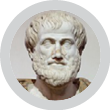 As a contrast to both Confucianism and traditional Christianity, Aristotle’s man of complete virtue wholeheartedly claims well-deserved honor and praise. His magnanimous nature is always truthful. According to Aristotle, high-mindedness rather than humility is the crown of the virtues.