
Since my 50th birthday, I’ve been paying more attention to online advertisements that promote financial investment strategies. My wife and I are pleased that we’ve made some progress with our retirement savings this past year. We’re hoping for an even more prosperous year in 2020.
Of course a life well-lived extends far beyond financial security. Integrity, selflessness, and generosity all require investing in the things that matter most.
As we enter a new decade, I invite each of us to to strengthen our retirement portfolios with the following key investments.
- Invest in Relationships – In 1938, scientists began tracking the health and happiness of 268 Harvard sophomores. This longitudinal study has continued to the present day, expanding to the children and grandchildren of the original subjects. One of its most resounding conclusions is that relationships are more important than anything else, including money, fame, and personal accomplishments. Researchers found that those who enjoyed warm and satisfying relationships at age 50 were by far the happiest at age 80. They had more robust physical, mental, and emotional health. The takeaway? If you want enduring happiness well into your golden years, make your investments in family and close friendships the most important part of your retirement portfolio.
- Invest in Learning – Many religious traditions affirm that knowledge is the only thing we can carry with us into the eternities. Whether or not this is true, most of us understand the power of education and the value of truth. But too often we rest on our laurels and stop learning, essentially cutting ourselves off from the vast tree of knowledge that fills the earth. Confucius taught that while the wise are confident regarding what they do know, their endless quest for knowledge makes them keenly aware of what they do not In many cases, truth can only be found by examining both sides of an issue. Rigid, uncompromising positions can blind both our hearts and our minds. One of our most difficult challenges is to learn from those we disagree with, those who might oppose our worldview. But with an open mind and a little humility, we can rise above ignorance and learn something new every day of our lives.
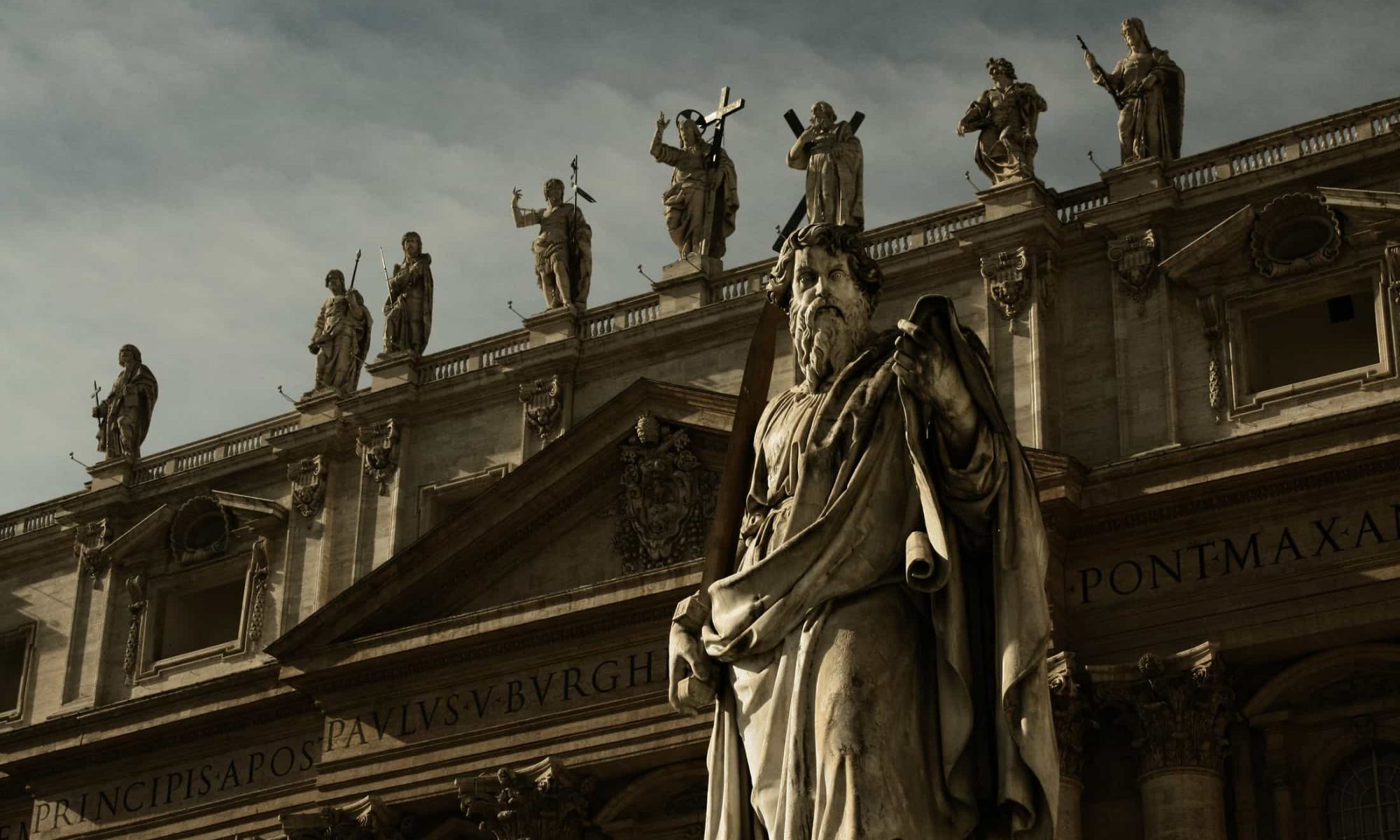
- Invest in Kindness – When we invest money in financial markets, we expect to see a vigorous return at some future time. But some of life’s greatest rewards come when we give selfless gifts without expecting anything in return. Such gifts are more likely to produce gratitude, which in turn inspires generosity toward others who might be incapable of returning the favor. All the while, karma works steadily in the background, generating priceless, immaterial gifts that make their way back to the original giver. Ralph Waldo Emerson referred to this as the law of compensation: “Love and you shall be loved. All love is mathematically just, as much as the two sides of an algebraic equation.” While love and kindness are not always reciprocated immediately, the cosmic laws of nature ensure that we will be compensated in the long run. Emerson affirms that sooner or later, benevolence returns to us through the intervention of “a third silent party to all our bargains.”
- Invest in the Present Moment – Over the past twenty years or so, the field of positive psychology has exploded with thousands of studies on the science of happiness. Researchers often promote character strengths and attitudes that lead to more flourishing lives. For example, they maintain that one of the keys to happiness is to live more fully in the present. This doesn’t mean that we neglect our responsibility to prepare for the future. In fact, having an eye toward the future can guide and inspire our present actions. True joy can then be found in the small and simple things, as we immerse ourselves in the beauty of nature and the pleasure of family and friends. Many of us struggle to slow down and live in the moment, while others lack the patience and foresight to prepare for the future. As we cultivate the ability to do both, we’re more likely to achieve the balance that leads to lasting happiness.
As the new year approaches, may we all invest in timeless wisdom that can light our path toward the abundant life. May we find an abundance of love, an abundance of joy, and an abundance of truth. And may this abundance overflow into the lives of those we encounter every day.
 Aristotle explains that a magnanimous man believes he deserves great things such as honor and respect because he really does deserve them. He is great both in the sense that he has obtained a fullness of virtue and in the sense that he possesses wealth, power, and influence. His abundant resources allow him to do much more good for others than they could do for him. While he willingly accepts legitimate honors bestowed by noble men, he has no interest in arrogantly displaying his superiority among ordinary people. In fact, he is self-effacing and unassuming among them. It is only in the presence of distinguished, influential men that he speaks openly of his accomplishments. Nonetheless, he is always more concerned with promoting truth and virtue than he is with impressing other people.
 One of Ralph Waldo Emerson’s favorite themes is that each individual must discover and embrace his or her personal calling in life. Each person “has faculties silently inviting him thither to endless exertion…. He inclines to do something which is easy to him, and good when it is done, but which no other man can do. He has no rival. For the more truly he consults his own powers, the more difference will his work exhibit from the work of any other. His ambition is exactly proportioned to his powers.…Every man has this call of the power to do some[thing] unique, and no man has any other call….”
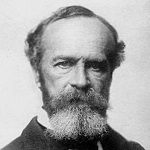 I firmly believe that every person possesses unique gifts that can only be developed through strenuous effort and refined through adversity. William James, the father of modern psychology, speaks of the challenge each of us face in realizing our potential: “Every one knows on any given day that there are energies slumbering in him which the incitements of that day do not call forth, but which he might display if these were greater. Most of us feel as if we lived habitually with a sort of cloud weighing on us, below our highest notch of clearness in discernment, sureness in reasoning, or firmness in deciding. Compared with what we ought to be, we are only half-awake. Our fires are damped, our drafts are checked. We are making use of only a small part of our possible mental and physical resources.”

 As the virtue that most impacts human relationships, benevolence is an indispensable catalyst for change. In Strength to Love, Martin Luther King states, “Returning hate for hate multiplies hate, adding deeper darkness to a night already devoid of stars. Darkness cannot drive out darkness; only light can do that. Hate cannot drive out hate, only love can do that.” Dr. King’s call for change through nonviolent resistance is grounded in the principle of love, which has the power to destroy the forces of evil and establish justice.